

 Current position > Product detail
『Oil Flow Meter Accuracy 0.1 Percent: Achieving Ultra-Precision in Liquid Measurement』Related information(clamp on meter|electromagnetic meter|venturi meterrotameter|orifice meter|ultrasonic flow meter|mass flow meter|coriolis mass flow meter|coriolis flow meter|magnetic flow meter|magmeter flow meter|magflow flow meter|mag meter flow meter|electromagnetic flow meter|vortex flow meter|turbine flow meter|thermal mass flow meter|thermal flow meter|rotameter flow meter)

Oil Flow Meter Accuracy 0.1 Percent: Achieving Ultra-Precision in Liquid Measurement
Quick Answer: A 0.1 % accuracy oil flow meter is not a laboratory-only spec. We supply Coriolis mass flow meters that reliably deliver ±0.1 % of rate for mineral oils, crude, fuel oil, and lubricants on real production lines. You get custody-transfer-grade measurement without the need for flow conditioning or frequent recalibration.
Most engineers ignore the fine print on an accuracy statement. They see "0.1 %" and assume the instrument hits that number across the whole range. In practice a meter might achieve 0.1 % only from 50 to 100 % of its max flow. The Silver Automation Instruments R series Coriolis meter holds 0.1 % accuracy from 20 to 100 % of the calibrated span. That wide turndown matters a lot when a diesel loading rack runs at 200 kg/h during a slow drip fill and then jumps to 8000 kg/h a few minutes later.
Why 0.1 % Accuracy Changes Oil Measurement Economics
In a typical medium-size lube oil blending plant in Thailand, the site runs 15 batch meters. A meter with 0.5 % accuracy can waste 500 kg of base oil per 100-ton batch. At AUD 2.50 per litre for a PAO synthetic base stock, that is AUD 1250 of give-away product in a single blend. Multiply by 15 meters and 8 batches a day, and the number becomes a boardroom problem.
The same logic applies to marine fuel bunkering in Singapore. A Coriolis meter with 0.1 % accuracy gives the buyer and the seller confidence that the 380 cSt fuel oil mass total is correct to within ±80 kg on an 80-ton delivery. When the spread between contracted and actual density can cost thousands of dollars, a 0.1 % mass flow meter eliminates density-as-a-variable arguments. The meter measures mass directly. It does not need a separate density input to calculate volume-mass conversion.
Coriolis Technology That Hits 0.1 % on Real Oil
A Coriolis meter from Silver Instruments measures mass flow independent of fluid properties. The twin-tube design oscillates at its natural frequency. When oil flows through the bent tubes, Coriolis forces create a phase shift. Two PT100 sensors detect that shift. The transmitter converts the data into mass flow, density, and temperature. No moving parts, no wear, no drift caused by viscosity changes.
We have shipped meters to a crude oil separator test facility in Western Australia. The process fluid ranged from 1 cP light condensate to 450 cP waxy crude. Inlet temperature varied from 15 °C on a winter morning to 45 °C under full sun. The 0.1 % R series meter held its accuracy without any viscosity correction table. The plant engineer compared the mass total against a weighbridge over a 30-day run. The deviation stayed at 0.08 %.
Common Oil Applications Where 0.1 % Pays Back Fast
Small DN15 and DN25 Coriolis meters serve additive injection systems in lubricant plants. A typical anti-wear additive costs AUD 18 per litre. The metering pump can slug, but the Silver Instruments meter measures the true mass per shot within ±0.1 %. The customer, a oil blender in Indonesia, reduced additive give-away by 2.3 tonnes per year after installing 12 units.
DN50 and DN80 meters work at truck loading terminals. A 4-20 mA HART output connects directly to the custody transfer flow computer. In Vietnam, a fuel distributor uses six DN80 Coriolis meters for diesel and gasoline loading. Each meter came with an ATEX Zone 1 certification and a local indicator. The 0.1 % accuracy helped them meet the local metrology requirements for trade without a
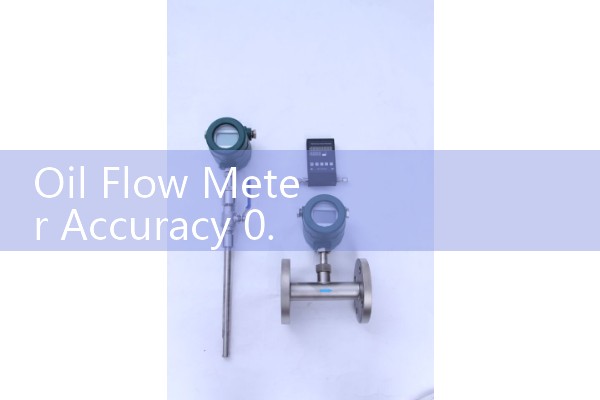
DN100 and DN150 meters handle crude oil pipeline export. Silver Instruments recently supplied a DN150 Coriolis meter to a production site in Nigeria. The meter measures 60 to 120 m³/h of 30 °API crude. The client needed 0.1 % plus a SIL 2 safety rating. We integrated the meter with a pressure transmitter and a flow computer in a local panel.
Installation Factors That Keep Accuracy at 0.1 %
A Coriolis meter is not immune to poor installation. Two-phase flow kills accuracy. A small amount of entrained air in a lube oil return line can make the meter read high by 2-3 %. We always recommend a back-pressure valve downstream to keep the meter full. The minimum back-pressure is 1.1 bar plus the vapour pressure of the lightest fraction at the operating temperature.
Pipe stress also matters. A DN80 meter mounted between two rigid pipes without flexible hoses can see axial force that shifts the zero. A zero shift of 0.02 mm translates into an offset error of 0.05 to 0.15 % on a sized meter. Our installation guide includes a simple zero-verification routine that takes 10 minutes. Fill the meter with static oil at process temperature, close the isolation valves, and check the zero value. If the zero drifts by more than 0.3 kg/h on a 5000 kg/h meter, adjust the mounting.
FAQ About 0.1 % Oil Flow Meters
Does a 0.1 % Coriolis meter need NIST or ISO 17025 calibration?
Every Silver Instruments Coriolis meter leaves the factory with a 5-point water calibration traceable to national standards. For oil applications we can supply an ISO 17025 calibration with mineral oil on request. Most customers use the water cal plus a field zero verification. The correction between water and oil is negligible on mass flow because the meter measures mass, not volume.
What viscosity range works at 0.1 % accuracy?
The R series holds 0.1 % from 0.5 cP to 1000 cP for mass flow. The density accuracy drops slightly above 500 cP due to higher pressure drop, but the mass flow measurement remains stable. We have test data on 900 cP heavy fuel oil at 80 °C showing a mass error of 0.12 %, still within the 0.1 % + zero stability envelope.
Can the meter measure oil with water content?
Yes, as long as the water stays in solution or as a stable emulsion. Free water slugs cause rapid density and drive-gain fluctuations. The meter diagnostics will flag the issue on the display. We recommend installing a sampling point upstream and draining free water before high-accuracy batches.
What certifications are available for custody transfer?
We can supply the meter with OIML R117-1 certification for liquid custody transfer. The ATEX Zone 1 and IECEx versions meet the safety requirements for oil & gas sites. SIL 2 compliance is also available for safety-critical loops.
How do I get a price and a proposal for my oil metering skid?
Send us your oil type, flow range (kg/h or L/h), pipe size (DN), operating temperature (°C), and viscosity (cP). Add the required pressure rating and any hazardous area class. We will return a Coriolis meter selection with a price for the meter, transmitter, and optional local panel within one working day.
Silver Automation Instruments supplies 0.1 % Coriolis mass flow meters for oil and liquid measurement across Southeast Asia, Oceania, the Middle East, and Africa. We stock common DN15 to DN150 sizes in our Australia warehouse. Trade customers and EPCs can register for dealer pricing on our website flow-meter.com.au.