

 Current position >About Us
Turbine Flow Transmitters: Explosion-Proof Field Instruments for Hazardous Areas
Quick Answer: Silver Instruments supplies explosion-proof turbine flow transmitters for hazardous area flow measurement. These field instruments handle diesel, solvents, light chemicals, and LPG in Zone 1 and Zone 2 locations. Output options include 4-20 mA HART and pulse, with body sizes from DN15 to DN200.
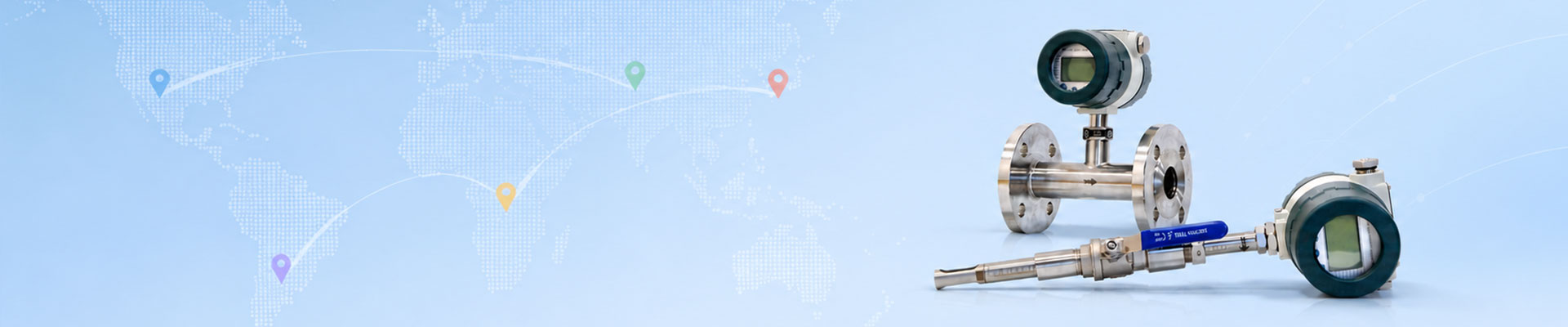
Silver Automation Instruments builds turbine flow transmitters for oil and gas, chemical, and marine sites where flammable gas or vapor may be present. The transmitter body and electronics housing carry Ex db or Ex d flameproof protection. That means the ignition source stays inside the housing. The process area stays safe.
What Makes a Turbine Flow Transmitter Explosion Proof
An explosion-proof turbine flow transmitter is not sealed from gas. The housing is strong enough to contain an internal explosion. Hot gas cools before it reaches the outside atmosphere. The flame path gap is machined to a tight tolerance. Because of this, the unit can sit in a Zone 1 or Zone 2 area without added purge systems.
Most engineers skip the theory and ask for the certificate. We provide ATEX and IECEx certificates on request. For Middle East and Southeast Asia projects, IECEx often matters more than ATEX. For Australia, IECEx is usually accepted under local rules. For Latin America, some end users ask for both ATEX and IECEx.
Hazardous Area Certification and Zones
A standard turbine flow transmitter with a remote display can work in Zone 2 if the sensor is passive and the amplifier is in a safe area. But a field-mounted unit with integral electronics needs Ex db or Ex d certification for Zone 1. Most sites we serve in Vietnam, Indonesia, Nigeria, and Colombia run gas or solvent lines near the transmitter. These are Zone 1 or Zone 2 areas.
Silver Instruments supplies the SIL-TF-EX series with II 2 G Ex db IIB T6 Gb or II 2 G Ex db IIC T6 Gb depending on the gas group. The T6 temperature class means the surface temperature stays below 85 °C. That rating suits propane, ethylene, and many solvent vapors. If your process fluid runs hot, tell us the fluid temperature. The T class may drop to T5 or T4.
Key Specifications for Field Instruments
The SIL-TF-EX series covers pipe sizes from DN15 to DN200. Accuracy is ±0.5% of reading for liquids with viscosity from 0.5 to 5 cP. For diesel and light fuel oil, repeatability is ±0.1% or better. The standard output is 4-20 mA HART with a pulse output. Some customers use the pulse output for batch control on loading skids.
Wetted materials are 316L stainless steel for the body and rotor support. The rotor is CD4MCu or 316L depending on the fluid. Bearings are tungsten carbide or ceramic. For marine fuel measurement, we often supply a 316L body with tungsten carbide bearings because the fuel may carry small particles.
Pressure rating is PN16 to PN40 by default. Higher ratings up to PN100 are available on request. The standard process connection is wafer or flanged to EN 1092-1. ANSI 150 and 300 flanges are also common. Fluid temperature range is -20 °C to +120 °C for the standard version. A PT100 temperature sensor can be built into the meter body for temperature compensation. The integral display can operate from -20 °C to +60 °C ambient.
Industry Applications We See
Last year a paint manufacturer in Vietnam ordered six SIL-TF-EX transmitters for solvent batching. They needed Zone 1 certification because the solvent room handles toluene and xylene. The units replaced older variable area meters. The plant engineer told us the pulse output made batch totals easier to track than a 4-20 mA signal alone.
In Nigeria, a gas processing company uses turbine flow transmitters on condensate lines. The units run in Zone 2 with 4-20 mA HART into a flow computer. The HART signal lets the operator read flow