


『Oil Flow Meter Calibration: Setting Zero Points and Fluid Correction Factors』Related information(clamp on meter|electromagnetic meter|venturi meterrotameter|orifice meter|ultrasonic flow meter|mass flow meter|coriolis mass flow meter|coriolis flow meter|magnetic flow meter|magmeter flow meter|magflow flow meter|mag meter flow meter|electromagnetic flow meter|vortex flow meter|turbine flow meter|thermal mass flow meter|thermal flow meter|rotameter flow meter)

Oil Flow Meter Calibration: Setting Zero Points and Fluid Correction Factors
Quick Answer: To calibrate an oil flow meter, you first set a stable zero point when the meter is full of oil but not flowing. Then you apply a fluid correction factor to match the actual viscosity and density of your oil. Skipping either step leads to errors of 0.5% to 2% or more, which directly affects billing and blending accuracy.
In practice, we see many plants calibrate flow meters with water. Water is easy and cheap. But oil is thicker, stickier, and has a different density. A meter that reads perfectly on water can be 1.5% off when you run hot heavy fuel oil through it. Most engineers skip the fluid correction factor because they do not see an immediate problem. But over a month of custody transfer at 500 m³ per day, that 1.5% error adds up fast.
Why Zero Calibration Matters More for Oil Than Water
Oil, especially thick crude or bunker fuel, tends to leave a thin film inside the measuring chamber. This is typical for oval gear flow meters and positive displacement types. A small residue can create a positive offset at zero flow. You might see a flow reading of 2 liters per hour when the line is shut. If you do not zero out that offset, your daily totalizer will include phantom flow. We have seen this at a lubricant blending plant in the Philippines. They used a DN25 oval gear meter to dose bright stock base oil. The zero drifted after two weeks because the oil cooled and left a waxy layer. They had been over-reporting 40 liters per day of expensive base oil. After a simple zero set procedure, the error disappeared.
Setting zero is simple but must be done right. Fill the meter completely with process oil, not air. Close the downstream valve and wait for the temperature to stabilize. The meter body should be at normal operating temperature. If you zero a cold meter and then run oil at 80°C, the thermal expansion changes clearances and your zero will shift. A good rule: let oil circulate for 15 minutes before you pull the zero button. Silver Automation Instruments oval gear flow meters have a local display and a magnetic button combo to lock the zero without opening the housing. This helps in ATEX Zone 1 areas where opening the cover is a hassle.
Fluid Correction Factors: Stop Using the Factory K-Factor Blindly
Every oval gear meter leaves our factory with a K-factor in pulses per liter based on calibration with a reference oil at 20°C and 20 cP viscosity. When your oil deviates from that reference, the actual volume per pulse changes slightly. This is not a flaw. It is physics. High viscosity reduces slip across the gears. Low viscosity increases slip. For example, a meter calibrated at 20 cP will over-register flow when measuring diesel at 3 cP if you do not apply the correction. The error can be up to 0.8% for thin oils. That is why we provide fluid correction factor tables for common oil products: diesel, heavy fuel oil (HFO), marine gas oil (MGO), and vegetable oils.
Here is a real scenario. A biodiesel producer in Malaysia uses our DN40 oval gear meter to measure feedstock palm oil at 50°C. The palm oil viscosity was 28 cP, not the 20 cP reference. Without correction, the meter read 1.2% low. After enterin
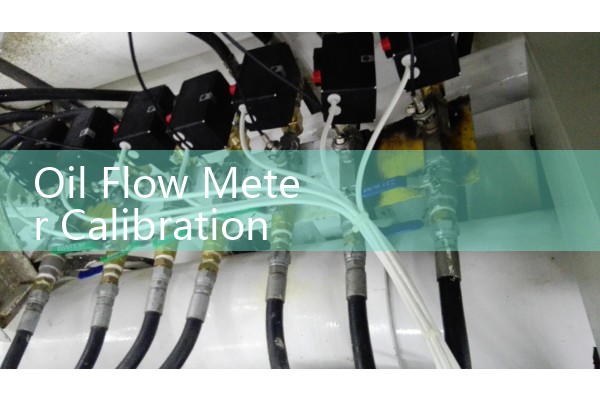
For Coriolis mass flow meters used in crude oil offloading, the zero point is equally critical but related to tube stiffness and temperature. Silver Automation Instruments Coriolis meters can output mass flow directly, and we recommend a field zero check every six months. In a recent project in Oman, a 4-inch Coriolis meter used for crude oil export started reading 300 kg/h at no flow after a sand particle got stuck in the tube. A zero reset on site saved a shutdown.
Get the Right Calibration Factor for Your Oil
If you are setting up a new oil meter or you suspect your existing meter is drifting, do not guess. Send us your oil type, operating temperature (°C), pipe size (DN), and flow range (liters per minute or m³/h). We will check the fluid correction factor against our calibration library and send you the adjusted K-factor for your flow computer. Email our team at [email protected] or use the inquiry form on the oval gear flow meter product page.
Frequently Asked Questions
Q: Can I calibrate an oval gear oil flow meter with water instead of oil?
You can, but the K-factor will be wrong for oil. Water calibration is useful for a quick function check. For custody transfer or batching, always calibrate with the actual oil or apply a verified fluid correction factor. Silver Automation Instruments can supply meters with an optional dual calibration certificate (water and oil).
Q: How often should I check the zero point on a heavy fuel oil meter?
For meters running heavy fuel oil above 200 cP, check the zero point every two to four weeks. The thicker the oil, the more frequent the checks. Our service engineers in Africa often train local operators to do a quick zero check at every batch change because HFO quality varies per delivery.
Q: What is the difference between a fluid correction factor and a K-factor?
The K-factor is the number of pulses per unit volume from the factory calibration. The fluid correction factor is a multiplier you apply to the K-factor to compensate for viscosity and density differences. Think of the K-factor as the base value and the correction factor as the fine tuning for your specific oil.
Q: Do Coriolis oil flow meters need a fluid correction factor?
Coriolis meters measure mass flow directly, so they do not need a viscosity correction factor. However, they still require a zero calibration under process conditions. Air bubbles and dense oil slugs can affect the zero. We always recommend a field zero before commissioning a Coriolis meter for bunker fuel metering.
Q: Can Silver Instruments provide on-site calibration support in Southeast Asia?
Yes. We have partners in Vietnam, Indonesia, and the Philippines who can visit your site with a master meter or a portable calibration rig. Send us your location and we will connect you with the nearest service team.
 Hot Blog
 Related AD
