


『Soybean Oil Flow Meter 2 Inch: Packaging Line Integration and Automation Tips』Related information(clamp on meter|electromagnetic meter|venturi meterrotameter|orifice meter|ultrasonic flow meter|mass flow meter|coriolis mass flow meter|coriolis flow meter|magnetic flow meter|magmeter flow meter|magflow flow meter|mag meter flow meter|electromagnetic flow meter|vortex flow meter|turbine flow meter|thermal mass flow meter|thermal flow meter|rotameter flow meter)

Soybean Oil Flow Meter 2 Inch: Packaging Line Integration and Automation Tips
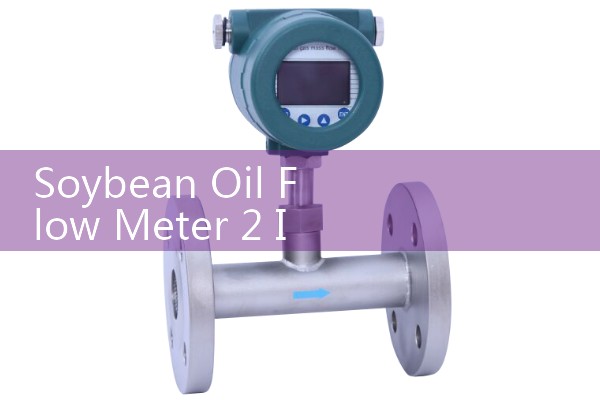
Quick Answer: A 2-inch (DN50) flow meter for soybean oil filling lines must handle viscosities from 40 to 120 cP at 30–70 °C. Oval gear meters or Coriolis mass meters with pulse output integrate directly into PLC-controlled filling heads. For fully automated packaging, choose a meter with a built-in batch controller and CIP-compatible design. Send us your oil temperature, filling volume, and target accuracy to get a recommendation that fits your exact line.
Why 2-Inch Meters Are Standard on Oil Filling Lines
Soybean oil packaging runs at flow rates from 30 to 600 liters per minute on a typical 2-inch pipe. A DN50 connection balances speed with accuracy for bottles, jerry cans, and drums. Filling heads need a fast response so a meter with a frequency output (10–1000 Hz) helps the PLC stop valves at the right volume. We have seen many small and medium producers in Vietnam and Nigeria standardize on this size because it matches their existing pipework and pump capacity.
Choosing the Right Meter Type for Soybean Oil
Positive displacement oval gear meters work well with soybean oil. They give stable readings even when viscosity changes during start-up or at different ambient temperatures. One customer in Indonesia uses an oval gear meter with 4-20 mA and pulse output to fill 5-liter bottles at 40 packs per minute. For edible oil, all wetted parts must be 316L stainless steel with PTFE or Viton seals. Another option is a Coriolis mass flow meter if you care about direct mass measurement and want to track density changes in real time. However, Coriolis meters cost more upfront. In practice, most packaging lines use oval gear meters because they are easy to clean and maintain.
Key specifications to check:
Pipe size: 2 inch (DN50) flanged or tri-clamp
Wetted material: 316L stainless steel, PTFE, FFKM seals for high oil resistance
Accuracy: ±0.5% of reading or better
Output: pulse (NPN/PNP) and 4-20 mA HART
Temperature range: 0–120 °C to handle warm oil and CIP cycles
Flow range: 20–600 L/min for oval gear, 1–1000 kg/min for Coriolis
Integration into Packaging Machines
Most automated fillers have a central PLC that reads flow meter pulses. The meter sends a certain number of pulses per liter. The PLC counts pulses until the setpoint volume is reached, then closes the fill valve. A fast update rate under 50 ms keeps the overfill error small. If you are running a multi-head filler, one flow meter per lane gives the best repeatability. We helped a lubricant oil packager in Malaysia integrate 6 oval gear meters into a split-lane conveyor. They now achieve ±0.2% repeatability on 1-liter bottles. For soy oil, consider a meter with a local display and batch preset function. Operators can manually start a batch without network connection, which is handy during line maintenance.
Automation Tips for High-Speed Lines
Here is what we learned from field installations. First, mount the flow meter close to the fill nozzle. A long pipe between the meter and nozzle adds dribble volume, which hurts cut-off accuracy. Second, use a meter with an active pulse output (NPN or PNP) and a 24 VDC supply. Many PLCs accept high-speed counters on digital inputs, so you avoid analog delay. Third, add a check valve right after the meter to prevent backflow pulses when
A Real Example from a Soy Oil Bottling Plant
In early 2024, a soybean oil refiner in Thailand approached us. They were filling 1-gallon and 5-gallon containers on separate lines. Their old turbine meters gave errors above 1.5% because soybean oil viscosity drifted with morning and afternoon temperatures. We supplied a DN50 oval gear flow meter with 316L body, PTFE gears, and dual output (pulse + 4-20 mA). They integrated it into their PLC and set the fill volume to 4.8 liters with a pre-stop signal that slows the pump at 4.6 liters. After commissioning, their fill accuracy improved to ±10 mL, and they cut oil giveaway by 0.8% per container. That sounds small but over 100,000 containers per month, it adds up.
FAQ
Q1: Can I use a 2-inch flow meter for cold soybean oil below 10 °C?
Yes, but viscosity rises sharply below 15 °C. An oval gear meter still works well because it mechanically displaces fluid. Check the minimum flow in cold conditions to avoid overloading the gears. If you pump oil at 5 °C, send us your flow rate and we will check the pressure drop.
Q2: Do I need a sanitary meter for food-grade soybean oil?
For edible oil, the meter should have 3-A or EHEDG certified parts. A tri-clamp connection is easier to disassemble for daily cleaning. All seals must comply with FDA 21 CFR 177.2600. We usually supply Viton or FFKM gaskets for vegetable oil lines.
Q3: How do I interface the meter with a Siemens S7-1200 PLC?
Most of our meters have an NPN pulse output. Wire the signal to a high-speed digital input on the PLC and use a counter block. Set the meter’s pulse scaling to 1000 pulses per liter for easy coding. If you use 4-20 mA HART, you can read both flow and total from the same loop, but analog response is slower. Ask for our wiring diagram with your specific PLC part number.
Q4: Can the same meter handle soybean oil and palm oil?
Yes, if the viscosity ranges overlap. Soybean oil is around 50 cP at 30 °C, crude palm oil can be 80–120 cP. An oval gear meter with a wider turndown ratio handles both. For frequent product changeovers, a meter with a drain port reduces cross-contamination.
Q5: What maintenance does a soybean oil flow meter need?
After each cleaning cycle, flush the meter with warm water. Inspect the gears and seals every 6 months. If you run abrasive crude oil, check for wear on the rotors. We recommend a calibration check once per year using a master meter or gravimetric method. Our engineers can visit sites in Southeast Asia and Oceania for on-site calibration.
Get a Quote for Your Packaging Line
Tell us your pipe size (DN), flow range, oil temperature, and filling volume per container. We will propose the right model from our oval gear or Coriolis meter range. Email your details to [email protected] or call our Australian office on +61 3 9005 1132. Our team understands packaging automation from single-head fillers to rotary 24-head machines.
 Hot Blog
 Related AD
