


『Flow Meter Coriolis: Direct Mass and Density Measurement in Process Piping』Related information(clamp on meter|electromagnetic meter|venturi meterrotameter|orifice meter|ultrasonic flow meter|mass flow meter|coriolis mass flow meter|coriolis flow meter|magnetic flow meter|magmeter flow meter|magflow flow meter|mag meter flow meter|electromagnetic flow meter|vortex flow meter|turbine flow meter|thermal mass flow meter|thermal flow meter|rotameter flow meter)

Flow Meter Coriolis: Direct Mass and Density Measurement in Process Piping
A Coriolis meter reads mass flow in kg/h and live fluid density in kg/m³ from a single sensor. You do not need separate pressure or temperature transmitters to compensate the reading. That is why process engineers on chemical batching, fuel blending, and dosing skids switch to a Coriolis when accuracy below ±0.2% matters.
Why Direct Mass Flow Changes the Game on a Process Skid
Volumetric flow swings with temperature and pressure. A 10 °C shift in a hydrocarbon line can push the volume reading off by 0.7% before you even add a correction factor. Mass flow does not shift. A kilogram is a kilogram regardless of whether the fluid is at 20 °C or 60 °C. We saw this clearly on a palm oil refinery in Malaysia. Their turbine meter drifted every morning until the pipe cooled down. Once they fitted a Silver Instruments Coriolis with a compact DN25 sensor, the batch reports stopped showing phantom losses. The meter output the true mass of oil, and the density reading confirmed the blend ratio without a lab sample.
Density Output That Replaces a Lab Sample Loop
A Coriolis tube vibrates at its natural frequency. As fluid density changes, the resonance frequency shifts. The transmitter converts that into a density value with a typical accuracy of ±0.5 kg/m³. For a caustic soda dosing system at a wastewater plant in Chile, this meant the operator could see the 20% NaOH concentration drift in real time. No more grab samples. Because the meter outputs both mass flow and density over a single 4-20 mA HART pair, the PLC calculated the dry chemical mass feed directly. Most engineers skip the old density wheel and use the density output to run a PID loop on the neat chemical valve.
No Long Straight Pipe Runs Required
An electromagnetic or vortex meter often demands 15D upstream and 5D downstream. Coriolis meters do not need straight runs. The mass flow measurement relies on the Coriolis force generated in the vibrating tubes, not on a stable velocity profile. This saves real money when you are squeezing a meter between a pump discharge and a heat exchanger. A dairy in New Zealand used a Silver Instruments DN15 sanitary Coriolis right after a 90° elbow for their cream line. The installation cost was half of what it would have been with a magnetic meter that needed pipe rework. Even with two-phase froth, the meter flagged the gas fraction and held the mass flow steady.
Which Model Fits a Small Line Chemical Injection
For DN06 to DN15 lines running solvents, catalysts, or fragrances, the Silver Instruments SC-006 and SC-015 models cover 0 to 200 kg/h with ±0.10% rate accuracy. The density accuracy is ±0.001 g/cm³. The wetted parts can be 316L or Hastelloy C-22. A coatings factory in Thailand injected a titanium dioxide slurry through a SC-015. The meter tracked the density drop when the solids settled and triggered an alarm before the spray nozzle clogged. Send us your fluid viscosity, density range, and pipe DN. We will return a dimensional drawing and a price breakdown the same day. Reach the sales team at [email protected] or call +86-135-1213-1526.
Handling Viscous Fluid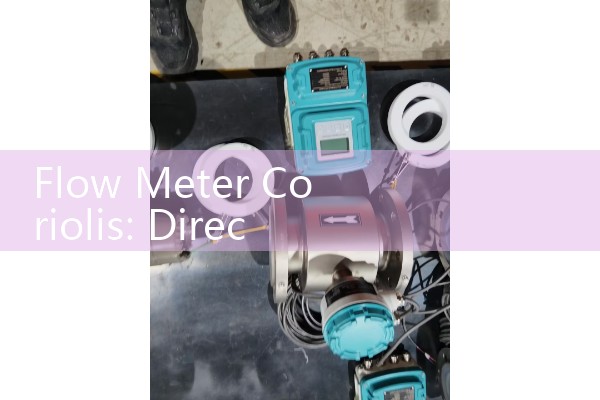
Heavy fuel oil, molasses, and polymer melts do not bother a Coriolis meter. The tube drive keeps the vibration amplitude constant regardless of viscosity. A bitumen blending plant in Saudi Arabia runs Silver Instruments SM-050 meters on lines moving 11,000 cP binder at 160 °C. No heater jackets on the meter body are needed, just a PT100 in the manifold for safety. The mass flow repeatability held within 0.05% after 18 months in service. So when someone tells you Coriolis meters fail on sticky fluids, that is just wrong. The only real limit is the pressure drop across the meter. You size it just like a valve, using the Cv curve we publish in every datasheet.
Coriolis Flow Meter: 5 Questions Engineers Ask Before a Quote
1. Does the meter need conductive liquid to work?
No. A Coriolis meter measures mass flow through inertia. It does not need any electrical conductivity. Deionised water, ethanol, and even ultra-pure HFE fluids measure fine. This is a key advantage over electromagnetic flow meters, which require a minimum of 5 µS/cm to register a signal.
2. Can I measure two-phase flow with some gas bubbles?
Yes, to a point. Silver Instruments transmitters use a multi-variable digital drive that detects gas entrainment. If the void fraction stays below 10% by volume, the meter will still give a reliable mass flow and density while outputting a diagnostic alarm for the gas phase. This helped a brewery in Mexico monitor their fermentation CO2 carryover without losing the batch flow total.
3. What is the pressure drop for a DN40 Coriolis on diesel?
For our SM-040 meter at 8,000 kg/h of diesel with density 830 kg/m³, the pressure drop sits around 0.6 bar. We calculate this for every inquiry because the pipe size, flow range, and viscosity all affect the number. Provide your normal and maximum flow rate, and we will send a detailed sizing report before you place an order.
4. Do you offer local calibration and support in the Middle East?
We ship factory-calibrated meters with a 10-point calibration certificate traceable to ISO 17025. Our distributor network in Saudi Arabia and the UAE keeps spare sensors and does on-site zero verification. Most issues that come up are caused by trapped air or a wrongly set empty-pipe threshold, not sensor drift. One phone call usually fixes the setting.
5. What maintenance does the flow tube need over 5 years?
None if you keep it clean. The tubes have no moving parts, bearings, or seals that wear out. A high-pressure nitrogen purge for polymer lines is a good practice during shutdowns, but the meter itself needs no periodic replacement. We have units in a Colombian sugar mill that have run for 10 years with the same tube integrity.
Ready to move away from volumetric guessing? Send your pressure in bar, temperature in °C, pipe size in DN, and your normal and maximum flow range. Reach the Silver Instruments applications team directly at +86-135-1213-1526, on WhatsApp at 86-135-12131526, or via WeChat at +86 13512131526. You can also email [email protected] with your process data sheet. We answer most sizing requests within one business day with a drawing and a firm quote.
 Hot Blog
 Related AD
