


『In Line Ultrasonic Flow Meter: Fixed Transit-Time Spool Piece Sensors』Related information(clamp on meter|electromagnetic meter|venturi meterrotameter|orifice meter|ultrasonic flow meter|mass flow meter|coriolis mass flow meter|coriolis flow meter|magnetic flow meter|magmeter flow meter|magflow flow meter|mag meter flow meter|electromagnetic flow meter|vortex flow meter|turbine flow meter|thermal mass flow meter|thermal flow meter|rotameter flow meter)
 ```html
In Line Ultrasonic Flow Meter: Fixed Transit-Time Spool Piece Sensors
Quick Answer
For clean liquids in full pipes, a fixed transit-time spool piece ultrasonic flow meter gives you repeatable accuracy without cutting the pipe every time. Silver Instruments supplies inline ultrasonic meters from DN15 to DN200 with 4-20 mA HART output and PT100 temperature integration. Send us your pipe size, flow range, and liquid type to get a complete quote including pressure and temperature specs.
Why Engineers Prefer a Spool Piece Design for Transit-Time Measurement
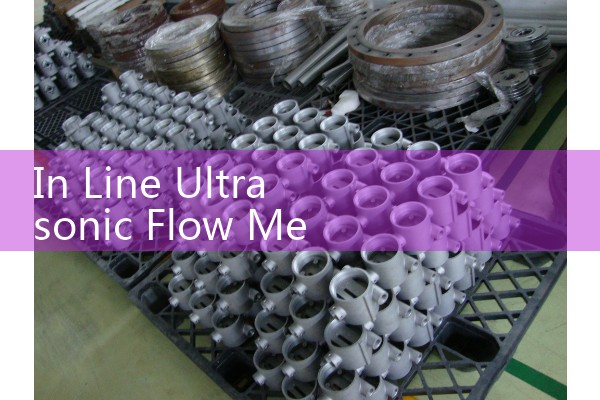
Inline ultrasonic flow meters using a fixed spool piece body are straightforward. You get a calibrated section of pipe with sensors already mounted and aligned at the factory. The transducer spacing and angle are fixed. This eliminates on site alignment errors that often happen with clamp on sensors.
Here is the thing. A spool piece meter can be pulled out, cleaned, and recalibrated off site without disturbing the rest of the pipe run. We see this a lot in food and beverage plants where CIP cycles run daily. The meter goes back in the same way it came out. No re alignment, no guesswork.
Most engineers skip this part but the spool piece material matters for signal stability. For brine, seawater, or demineralised water lines we recommend stainless steel 316L body with PEEK transducers. For cooling water in a Vietnam steel plant we paired a carbon steel spool piece with PTFE faced sensors to handle 80 °C water at 6 bar. The meter ran for two seasons without signal loss.
What Makes a Fixed Transit-Time Meter Different from Doppler or Clamp On
Transit-time ultrasonic meters send pulses diagonally through the liquid. The signal travels faster with the flow and slower against it. The meter measures the time difference and converts it to flow rate. This method needs clean liquids, less than 1000 mg/L of suspended solids typically. If your fluid is pure water, glycol, diesel, palm oil, or anhydrous ammonia, transit-time is the natural choice.
Because the sensors are fixed in a spool piece, the acoustic path length is locked. The measuring uncertainty stays within ±0.5 % of reading for Reynolds numbers above 4000. On a DN100 meter for a Jakarta district cooling plant, we saw repeatability better than 0.15 % across a 10:1 turndown.
In practice, fixed spool piece meters are easier to commission than wetted clamp on hybrids. You avoid coupling gel degradation, strapping errors, and pipe wall signal losses. That is why many EPCs in the Middle East specify spool piece ultrasonic flow meters for custody transfer on product pipelines.
Where These Meters Perform Best in the Real World
Fixed transit-time spool meters work where the pipe is always full and the liquid is reasonably clean. We have supplied them for these applications more times than we can count.
Feed water measurement at desalination plants in Saudi Arabia. Cold water flow to injection molding machines in a plastic factory in Thailand. Glycol brine flow tracking for ice thermal storage systems in Australia. Bunker fuel transfer lines on a small tanker vessel in Peru. Potable water distribution in a municipal network upgrade in Nigeria.
A paint manufacturer in Malaysia needed to meter solvent recovery lines with acetone and toluene. The flow range was only 0.3 to 3 m³/h on a DN15 line. The inline spool meter with stainless steel body and epoxy coated transducers handled the low flow with 4-20 mA output directly to their PLC. No separate flow computer needed.
Key Specifications You Need to Provide for a Quote
Silver Instruments configures each spool piece meter to the specified application. These are the parameters we ask for to generate an accurate part number and proposal.
Pipe size, from DN15 up to DN200 as standard. Bigger diameters on request. Process connection type, typically wafer or flanged to EN 1092-1 or ASME B16.5. Liquid type and typical
A recent order from a Colombian biodiesel plant needed DN80 inline ultrasonic meters for methanol feed at 40 °C and 12 bar, with remote display and ATEX Zone 1. We delivered full calibration certificates and pressure test reports with the spool pieces.
Signal Output and Integration with Your Control System
The basic output is 4-20 mA with HART. This lets you read instantaneous flow rate, totalised volume, and diagnostic bits over a single pair of wires using a HART handheld or the plant asset management system. Some customers prefer Modbus RTU over RS485 for direct integration with a PLC or RTU. We can include both options on the same transmitter board.
Many engineers ask about empty pipe detection. The meter monitors the signal quality and can trigger an alarm when the pipe drains. This prevents the transmitter from counting air as flow. We have seen this save a chemical dosing skid in a Singapore water treatment plant from overdosing flocculant during pump changeovers.
Installation Notes That Save Time on Site
Inline spool pieces need a straight run upstream and downstream to achieve the stated accuracy. We recommend 10 diameters upstream and 5 diameters downstream for a single path meter with no flow conditioner. For installations behind a partially open gate valve or a booster pump outlet, use a flow straightener or extend the upstream run to 15D.
Do not mount the meter at the highest point of a pipe section where air can collect. If you must install it there, add an automatic air vent upstream. The spool piece is directional, an arrow on the body shows the flow direction. In vertical pipes with upward flow, position the meter so it stays full even at low flow.
Last year a customer in Vietnam asked us about signal loss on a DN50 meter in a hot water return line. After a video call we realized the spool piece was right after an elbow with only 3D straight run. A flow conditioner plate solved it. No replacement needed.
Common Questions from Procurement and Engineering Teams
Can I get a fixed spool piece meter for a 2 inch chlorinated water line?
Yes. DN50 with carbon steel or 304 stainless body, PVDF transducers, and 4-20 mA HART works for chlorinated water up to 10 bar and 60 °C.
What if my flow range changes later? Can I reuse the spool piece?
The sensor is optimised for a velocity range of 0.3 to 10 m/s. If your new flow stays within that, the same meter works. If it drops below 0.1 m/s, a different transducer design may be needed.
Do you supply with ATEX or IECEx certification for Zone 1?
Yes. The spool piece with intrinsically safe sensors and an isolated transmitter can meet Ex ia IIC T4 for gas and dust. We include the certificate in the shipment.
Is a PT100 input standard on your converter?
On the advanced transmitter we include one PT100 input for heat metering or energy balancing. This is useful for chilled water or hot water billing systems.
What accuracy can I expect for diesel with viscosity around 5 cP?
For diesel at 20 to 25 °C, 5 cP is well within the clean liquid range for transit-time meters. You can expect ±0.5 % of reading above 0.5 m/s with a single path spool piece.
To request a datasheet, pricing, or a configuration check for your specific line, email [email protected] or call +86-135-1213-1526. You can also reach us on WhatsApp at 86-135-12131526 or WeChat at +86 13512131526. When you contact us, please provide your pipe diameter (DN), liquid, flow range, temperature, and pressure. This helps us get the right proposal to you within one working day.
``` Hot Blog
 Related AD
