


『In Line Air Flow Meter: Pneumatic and Compressed Air Ventilation Volume Monitoring』Related information(clamp on meter|electromagnetic meter|venturi meterrotameter|orifice meter|ultrasonic flow meter|mass flow meter|coriolis mass flow meter|coriolis flow meter|magnetic flow meter|magmeter flow meter|magflow flow meter|mag meter flow meter|electromagnetic flow meter|vortex flow meter|turbine flow meter|thermal mass flow meter|thermal flow meter|rotameter flow meter)

In Line Air Flow Meter: Pneumatic and Compressed Air Ventilation Volume Monitoring
Quick Answer
An in line air flow meter monitors the actual volume of compressed air or pneumatic gas moving through a pipe in real time. For most ventilation and compressed air systems, a thermal mass flow meter or a vortex flow meter provides direct mass or volumetric readings with no need for separate temperature or pressure compensation. Silver Automation Instruments supplies both types, with common outputs like 4-20 mA HART, RS485 Modbus, and local totalizer displays.
Why In Line Air Flow Meter Matters for Compressed Air
Compressed air is expensive. Many plants pay 70 percent of the electricity cost just to run air compressors. Yet a leak rate of 20 to 30 percent is normal in older factories. An in line flow meter placed after the main receiver tank or on a branch line to a production cell gives you the data to find leaks, allocate energy costs, and size new equipment correctly. Without a meter, you see only pressure. Pressure tells you almost nothing about flow.
We have seen this on customer sites many times. A food packaging plant in Thailand ran six air compressors thinking the load was high. After installing a thermal mass flow meter on the main header, the data showed actual consumption was only half of compressor capacity. They shut down two compressors and saved over 15,000 USD a year on electricity.
Hot Wire vs Vortex vs Orifice: What Engineers Choose
Most engineers skip the old orifice plate approach for compressed air. Orifice plates create permanent pressure loss, and you need a differential pressure transmitter plus a PT100 and a flow computer to get a mass flow value. That is three devices and many impulse line leak points.
In practice, the choice comes down to thermal mass flow meters and vortex flow meters. Thermal meters use two PT100 sensors, one heated and one as reference. The cooling effect of gas flow is directly proportional to mass flow. Because the sensor sits in the gas stream, you read kg/h or Nm³/h directly, no pressure or temperature transmitters required. This works well on dry compressed air lines in DN15 to DN80 sizes.
Vortex meters count the vortices shed from a bluff body. The frequency is proportional to actual volume flow. If you need a reading in Nm³/h, you add a built-in pressure and temperature sensor and the converter does the math. Vortex meters handle larger pipes, up to DN300, and handle wet or dirty air better than thermal probes.
Installation and Straight Pipe Requirements
In line means the meter body becomes part of the pipe. You cut a spool piece and flange it in, or you use a wafer-style body between flanges. For thermal insertion probes, you still need a tee or a flange port, so we treat that as in line for small pipes.
Straight run is a real constraint in compressor rooms. The rule of thumb: 15 diameters upstream and 5 diameters downstream for a thermal meter, and typically 20D upstream and 10D downstream for a vortex meter. If a control valve is right before the meter, add a flow straightener. We have a customer in Vietnam who skipped the straightener and got readings jumping 12 percent. After installing a simple tube bundle straightener from our stock, the reading stabilized within 1 percent of the reference meter.
Compressed Air Volume Monitoring: What Units You Actually Need
Different departments want different units. Maintenance teams ask for Nm³/h or SCFM. Energy managers want kg/h to calculate specific power consumption (kW per 100 m³/min). Production supervisors think in l/s or cfm at line pressure because that is what the tool consumes. A good inline air flow meter from Silver Instruments can output mass flow, volume flow at base conditions, and volume at line conditions simultaneously over Modbus. This stops arguments between departments.
For ventilation air in building management, you usually measure actual volume flow (m³/h or cfm) because the air is at near ambient conditions. A lightweight insertion thermal probe in a duct does the job and connects to the BMS via 4-20 mA. We stock probes with 200 mm to 600 mm insertion length, good for duct diameters from DN100 to DN600.
Pneumatic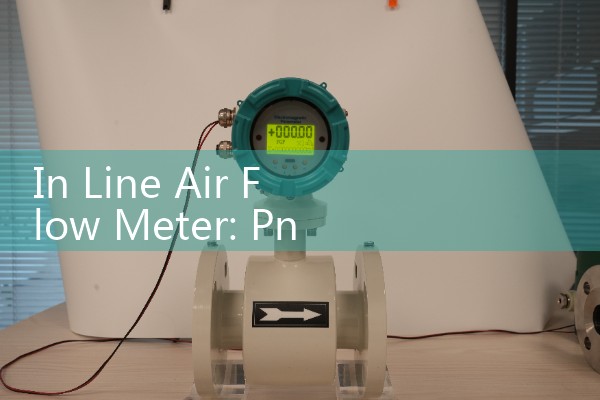
Pneumatic conveying for powder, grain, or chemical pellets often sits in ATEX Zone 1 or Zone 2 areas. Silver Instruments supplies thermal mass flow meters with Ex ia IIC T4 certification and vortex meters with Ex d IIC T6 housing. The transmitter electronics go outside the zone on a remote cable, so only the stainless steel sensor body is in the hazardous area.
A paint manufacturer in Malaysia needed to measure nitrogen flow to a solvent tank blanket. We supplied a DN25 thermal flow meter with PTFE lining and remote electronics. The nitrogen flow was only 2 kg/h normally, but we set a low-flow alarm at 0.5 kg/h to detect any nitrogen supply loss before oxygen entered the tank. That detail saved them a near-miss one month later.
Key Parameters You Must Specify Before a Quote
If you send an email with just "need a compressed air flow meter price," it takes three extra rounds of questions. Here is the thing: give us the following in your first message and we can return a firm quote within 24 hours. Pipe size (DN or inches), pipe material, operating pressure in bar, normal and max flow in Nm³/h or kg/h, air temperature in °C, required output signal (4-20 mA, pulse, Modbus), and if the area is safe or ATEX rated.
We also need to know if the compressed air is dry (dew point below -20 °C) or wet with possible condensate. Wet air damages a thermal sensor tip over time. In that case we recommend a vortex meter with stainless steel body.
Model Recommendations for Common Ranges
For pipe sizes DN15 to DN50 and clean dry air, our thermal mass flow meter model STF-025 handles 0.5 to 200 Nm³/h with a 4-20 mA output and a local display showing totalizer. Accuracy is ±1.5% of reading from 20% to 100% of range.
For DN50 to DN200 compressed air mains, the vortex flow meter SVF-100 is the standard choice. It comes with an integrated PT100 and pressure sensor, so the converter outputs compensated mass flow. Repeatability is 0.15% and it tolerates up to 350 °C.
For duct ventilation monitoring, the insertion type STF-300 inserts via a ½ inch NPT compression fitting. It measures up to 60 m/s air velocity and outputs a 4-20 mA proportional to velocity or volume. This is popular with HVAC contractors in the Middle East for fresh air and exhaust air balance reporting.
Frequently Asked Questions
Can one meter measure both flow direction? Yes, thermal mass flow meters inherently sense bidirectional flow if ordered with that option. Our STF series shows positive and negative flow on the display. Vortex meters are unidirectional by nature, though we supply a bidirectional vortex if specified in advance.
What is the typical response time? Thermal sensors react in 1 to 3 seconds for 63% of change. Vortex meters respond in under 1 second, which is better for burst consumption monitoring like pneumatic cylinder test rigs.
Do we need a flow conditioner for a tight installation? In most cases yes if straight run is less than 10D upstream. We keep tube bundle flow conditioners in stock for common pipe sizes. They add about 20 mbar pressure drop.
How does the meter handle compressor oil carryover? A tiny oil film coats a thermal sensor and causes drifting low readings. For oil-flooded screw compressors, we highly recommend a coalescing filter before the meter and a vortex meter instead of thermal. Or specify the sensor with a self-cleaning oil-resistant coating.
Can we get data into our PLC without an extra module? All Silver Instruments meters come with standard analog and pulse outputs. RS485 Modbus RTU is available on all models for direct integration to Siemens, Allen-Bradley, or Mitsubishi PLCs. We provide the register map document at no cost.
Get a Quote for Your Compressed Air Flow Meter
Send us your pressure (bar), temperature (°C), pipe size (DN), and flow range. Our team checks the application and recommends the right meter and installation parts. Contact Silver Automation Instruments at [email protected] or call +86-135-1213-1526. You can also reach us via WhatsApp at 86-135-12131526 or WeChat at +86 13512131526.
Find our full in line air flow meter range at flow-meter.com.au.
 Hot News
 Related AD
