


『Krohne Flow Meter Troubleshooting: Fixing Coil Currents, Empty Pipes, and Signal Noise Errors』Related information(clamp on meter|electromagnetic meter|venturi meterrotameter|orifice meter|ultrasonic flow meter|mass flow meter|coriolis mass flow meter|coriolis flow meter|magnetic flow meter|magmeter flow meter|magflow flow meter|mag meter flow meter|electromagnetic flow meter|vortex flow meter|turbine flow meter|thermal mass flow meter|thermal flow meter|rotameter flow meter)

Krohne Flow Meter Troubleshooting: Fixing Coil Currents, Empty Pipes, and Signal Noise Errors
Quick Answer: Coil current faults on Krohne electromagnetic flowmeters usually trace to moisture in the terminal box, an open excitation coil, or a loose signal cable. Empty pipe alarms often come from coated electrodes or an incorrect empty pipe threshold. Signal noise errors are corrected by grounding rings, chemical cleaning, or moving the signal cable away from VFD drives.
Most plants see these three faults on Krohne meters because the sensor is exposed to water, heat, and process coatings. Silver Automation Instruments supports maintenance teams with troubleshooting steps, replacement parts, and recalibration services. We have worked with wastewater plants in Vietnam, food processors in Australia, and chemical plants in Mexico.
Coil Current Faults on Krohne Electromagnetic Flowmeters
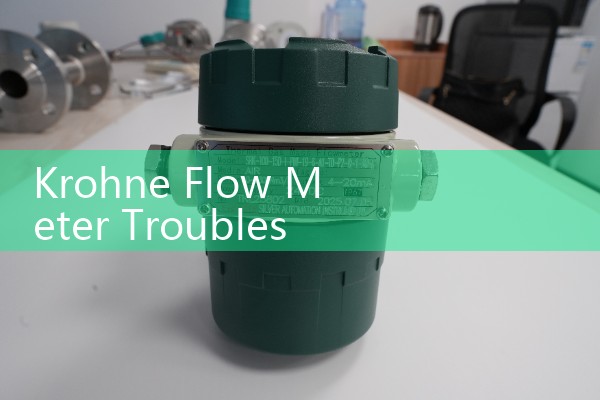
Krohne electromagnetic meters use a pulsed DC coil current to generate the magnetic field. When the transmitter reports a coil current open or excitation current error, the root cause is usually simple. Open the sensor terminal box first. Check for water ingress, green corrosion on terminals, or a cracked cable gland. In practice, moisture in the terminal box causes more coil current alarms than a failed coil.
Disconnect the converter cable at the sensor. Measure resistance across the coil circuit. A healthy Krohne coil loop on DN40 to DN200 sensors often reads between 20 and 120 ohms. A reading in kiloohms or an open loop points to a broken coil wire or a bad feedthrough. But do not replace the sensor yet. Clean the terminals and retest. We have seen a paint manufacturer in Southeast Asia find a single loose terminal screw that caused the whole alarm.
If the coil resistance is normal, suspect the converter. A Krohne IFC 100 or IFC 300 signal converter can show a coil current error after a voltage spike or lightning strike. Swap the converter with a spare unit only if you have verified the sensor side first. Send us your coil resistance reading and converter model. We can quote a replacement converter or a repaired unit within one business day.
Empty Pipe Alarms and Electrode Checks
An empty pipe alarm on a Krohne meter does not always mean the pipe is empty. Process coatings cause most false alarms. Fat, sludge, lime, or polymer can coat the electrode tips and reduce the signal below the empty pipe detection threshold. The transmitter then reports empty pipe while the DN80 or DN150 pipe is full.
First check the actual flow condition. Then remove the sensor and inspect the liner and electrodes. Clean with a soft cloth and warm water. Do not use a wire brush on a PTFE or PFA liner. For heavy grease, use a mild detergent that matches your process. A wastewater station in Danang, Vietnam had a Krohne DN200 meter reading empty pipe every Monday morning. The cause was a thin grease film from the weekend shutdown. Cleaning the electrodes solved it.
You can also adjust the empty pipe detection threshold in the converter menu. Krohne converters allow a threshold based on conductivity. For water above 20 µS/cm, the detection is normally stable. For low conductivity solvents below 5 µS/cm, the meter may need the empty pipe function disabled or a special setting. Record your fluid conductivity, temperature in °C, and liner type before you change the threshold.
Signal Noise From VFDs and Slurries
Here is the thing about signal noise on Krohne meters. The transmitter is rarely the problem. The installation and grounding usually cause the spikes. Keep the signal cable at least 300 mm away from VFD output cables, motor leads, and welding equipment. Separate grounded steel conduit is better. Do not run the signal cable parallel to power cables for long distances.
Grounding is the second biggest issue. An electromagnetic flowmeter needs a reliable process ground. Use the supplied grounding rings when the pipe is lined or non-conductive. A chemical plant in Saudi Arabia had a Krohne DN100 meter on a demineralized water line with signal noise. The missing grounding rings caused a 4 to 20 mA output that jumped every few seconds. Installing grounding rings on both sides fixed the signal.
For slurry flows with solids, signal noise can come from particles hitting the electrodes. This is normal
Field Checklist for Krohne Transmitters
Use this short sequence when you arrive at a Krohne meter with any of the three alarms. Step one. Inspect the terminal box for water, corrosion, and loose wires. Step two. Measure the coil resistance with the converter disconnected. Step three. Inspect the electrodes and liner for coating. Step four. Verify the grounding rings and cable shield. Step five. Check the empty pipe threshold and damping settings. Step six. If the meter still fails, record the sensor tag, DN size, liner, electrode material, converter model, and process fluid. Send these details to Silver Instruments for a repair or replacement quote.
Most engineers skip the terminal box check. Do not skip it. We have answered too many service calls where a 10 minute cleaning fixed the fault.
When to Replace a Krohne Meter or Part
Some problems do not justify a repair. If the coil resistance is open or the liner is cracked, replacement is often faster. A damaged PTFE liner on a DN100 food-grade meter can contaminate the batch and cannot be field repaired. For old Krohne converters with obsolete display boards, a new converter or a full Silver Instruments electromagnetic flowmeter may cost less than repeated service visits.
We supply replacement converters, cables, grounding rings, and electrode cleaning kits for common Krohne sensor sizes. We also supply complete electromagnetic flowmeters from DN15 to DN600 with 4-20 mA HART, pulse, and RS485 outputs. For corrosive seawater lines, ask about our seawater flow meter for desalination plants with titanium electrodes and PTFE liners. For diesel batching, see our oval gear flow meter for diesel custody transfer.
FAQ: Five Krohne Flow Meter Troubleshooting Questions
Why does my Krohne meter show a coil current open alarm after rain?
Water has entered the sensor terminal box or the cable gland is damaged. Dry the housing, replace the desiccant pack if present, and retest the coil loop. If the resistance is normal, the converter output will clear.
What should the coil resistance be on a Krohne DN100 electromagnetic sensor?
It depends on the sensor design and converter type. Most healthy mid-size Krohne sensors read from 20 to 120 ohms across the coil circuit. A very low or short reading below 5 ohms can also indicate coil damage. Compare with a similar known good sensor.
Can I change the empty pipe threshold without stopping the process?
Yes. You can change the threshold in the converter menu while the meter is powered. But you need to know the fluid conductivity. For water and wastewater above 20 µS/cm, the default empty pipe detection works well. For chemicals below 5 µS/cm, the alarm may need to be disabled only after you verify the process cannot run dry.
Why does my Krohne flow signal spike when a pump starts?
The pump motor or VFD is injecting electrical noise into the signal cable or the process ground. Increase the cable separation, use shielded twisted pair cable, and install grounding rings. Check the cable shield is grounded at one end only to avoid ground loops.
When should I replace the Krohne sensor instead of the converter?
Replace the sensor when the coil loop is open, the liner is cracked, the electrodes are worn through, or the process connection is corroded. A new sensor or a complete Silver Instruments electromagnetic flowmeter is often more economical for DN80 and smaller lines.
Contact Silver Automation Instruments for Krohne Repair and Calibration
So, before you order a full replacement, send us the field readings. Tell us your pressure in bar, temperature in °C, pipe size in DN, flow range, fluid conductivity, and the Krohne model. We will recommend a repair, a replacement part, or a new meter. Silver Automation Instruments serves flowmeter users in Southeast Asia, Oceania, Latin America, Africa, and the Middle East.
Tel: +86-135-1213-1526. Whatsapp: 86-135-12131526. WeChat: +86 13512131526.
 Hot Blog
 Related AD
