


『Wireless Water Flow Meter Monitoring: Remote Real-Time Facility Leak Detection』Related information(clamp on meter|electromagnetic meter|venturi meterrotameter|orifice meter|ultrasonic flow meter|mass flow meter|coriolis mass flow meter|coriolis flow meter|magnetic flow meter|magmeter flow meter|magflow flow meter|mag meter flow meter|electromagnetic flow meter|vortex flow meter|turbine flow meter|thermal mass flow meter|thermal flow meter|rotameter flow meter)

Wireless Water Flow Meter Monitoring for Remote Leak Detection
Wireless Water Flow Meter Monitoring: Remote Real-Time Facility Leak Detection
Quick Answer: Wireless water flow meter monitoring sends real-time flow data from remote pipes, tanks, and distribution lines to a control room or cloud dashboard. A sudden flow drop, a rising totalizer during idle hours, or a pressure difference often indicates a leak. Pair a Silver Automation Instruments electromagnetic or ultrasonic flow meter with a battery powered wireless transmitter for sites where cable costs are high.
Why Remote Leak Detection Needs Wireless Flow Data
Most plants already have flow meters on main lines. The missing part is often the data link. A wired 4-20 mA HART signal works inside a plant, but a remote tank or well may be 2 kilometers from the control room. Cable installation costs more than the meter. A battery powered wireless transmitter solves this in one afternoon.
Here is the thing. A leak does not always show a big change. A small crack in a DN50 line at 4 bar can lose 30 liters per minute. Over one day that is about 43,200 liters. If the flow meter totalizer keeps counting at 3 a.m. when the plant is idle, the system flags it. With wireless monitoring you see this without sending a technician to the site.
What Signals the Flow Meter Sends
Silver Instruments flow meters can output 4-20 mA, pulse, or RS485 Modbus RTU. The wireless transmitter reads these signals and sends data to a gateway or cell network. Engineers often configure the system to send flow rate, totalizer value, and signal quality every 30 seconds or every 10 minutes. Most engineers skip this part. The update interval changes battery life and leak response time.
For remote sites choose a battery powered electromagnetic flow meter if the water is conductive. For non-conductive fluids or temporary surveys, use a clamp-on ultrasonic flow meter. Both options work with a wireless RTU. The RTU can also read a pressure transmitter or a PT100 temperature sensor. This gives the team extra context for leak investigation.
Recommended Flow Meter and Wireless Transmitter Pairing
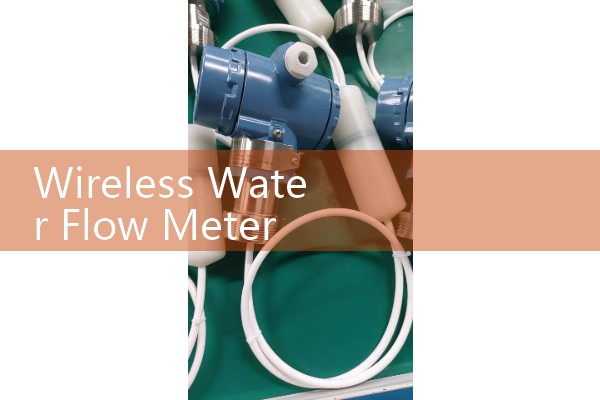
For most water and wastewater pipes from DN15 to DN300, use a Silver Instruments electromagnetic flow meter with a hard rubber or PTFE liner. Pair it with a battery powered wireless node that supports Modbus RTU and 4-20 mA inputs. For large pipes above DN200 where cutting the line is not possible, use a clamp-on ultrasonic flow meter. The clamp-on version works well for temporary leak detection surveys and does not stop production.
In hazardous areas specify ATEX Zone 1 approval. For desalination plan
Where Wireless Monitoring Pays Off
Remote pump stations, well fields, tank farms, and district metered areas benefit first. A paint manufacturer in Southeast Asia uses wireless flow meters on solvent recovery lines. The team checks flow data from a mobile phone. When a cleaning cycle used 40 percent more water than normal, the operator found a stuck valve before it became a bigger problem.
So the value is not just leak detection. The data is also proof of water balance. A facility can compare inflow and outflow over a day. If the difference is too high, there is likely an underground leak or an unmetered draw off. The same approach works in water networks across Southeast Asia, Africa, and Latin America.
Five Questions Engineers Ask Before Buying
Q: Can a wireless flow meter detect small leaks?
A: Yes if you monitor the totalizer trend during idle periods. A small leak may not change the flow rate much, but the totalizer climbs when there is no normal demand.
Q: How long does the battery last?
A: Most battery powered wireless transmitters run 2 to 5 years at a 10 minute update interval. Faster updates reduce battery life. Ask for a battery life estimate based on your data interval.
Q: Can I use this for seawater or wastewater?
A: Yes. Select the liner and electrode materials for the fluid. For seawater use a Silver Instruments electromagnetic flow meter with seawater rated electrodes. For wastewater use a model with anti-fouling liner.
Q: Do I need a flow meter and a pressure transmitter?
A: Not always. Flow data catches leaks directly. Pressure data helps locate the leak zone. Many sites install one flow meter per district metered area and a few pressure sensors for faster response.
Q: What information do I need for a quote?
A: Send us the fluid, the pipe size in DN, the pressure in bar, the temperature in degrees Celsius, the flow range in cubic meters per hour or kilograms per hour, and the distance from the sensor to the control room. We will propose a wireless flow meter package.
Contact Silver Automation Instruments for a specific recommendation. Call +86-135-1213-1526 or WhatsApp 86-135-12131526. You can also reach us on WeChat +86 13512131526. Our engineers ask for pipe size, flow range, and process pressure first. Then we reply with a short list of suitable meters and wireless nodes.
 Hot News
 Related AD
