


『High-Accuracy V-Cone Flow Meter Design for Restrictive Piping Layouts』Related information(clamp on meter|electromagnetic meter|venturi meterrotameter|orifice meter|ultrasonic flow meter|mass flow meter|coriolis mass flow meter|coriolis flow meter|magnetic flow meter|magmeter flow meter|magflow flow meter|mag meter flow meter|electromagnetic flow meter|vortex flow meter|turbine flow meter|thermal mass flow meter|thermal flow meter|rotameter flow meter)

High-Accuracy V-Cone Flow Meter Design for Restrictive Piping Layouts
Quick Answer: A V-Cone flow meter keeps ±0.5% accuracy even when straight pipe runs are almost zero. It reshapes the velocity profile with its central cone and cancels swirl from elbows or valves. Silver Automation Instruments has tested this design at 1D upstream distance and still got a stable 4-20 mA HART signal.
Engineers working on brownfield oil platforms, compact skids, or retrofit water injection lines face one hard limit. They need a reliable flow reading but they do not have the 10D to 30D of straight pipe that an orifice plate or turbine meter demands. The V-Cone solves this with a cone fixed in the center of the pipe. The cone flattens the velocity profile and forces a controlled differential pressure at the downstream tap. Because the measurement happens after the profile is reshaped, the meter ignores swirl and asymmetric flow that would throw off a standard orifice plate. Most engineers skip the theory and look straight at the numbers. Our factory tested a DN100 V-Cone meter placed 1D downstream of a fully open gate valve. The deviation from the reference meter stayed inside 0.3% across the 10:1 flow range.
How the Cone Works as a Built-In Flow Conditioner
A single elbow or a half-open valve sends a velocity peak to one side of the pipe. An orifice plate sees this distorted profile and gives a wrong differential pressure. The V-Cone does its own conditioning. Fluid hits the cone, accelerates towards the pipe wall, and fills the annulus in a symmetrical way. Low-pressure sensing happens at a tap on the downstream face of the cone. By that point, the velocity profile is already stable. The cone also pushes the effective Reynolds number limit down. A V-Cone can operate linearly at Re 8000, which means it can measure viscous fuels or hot oils where an orifice plate would already drift.
Real Accuracy Numbers from Crowded Installations
We collect field data directly from EPC contractors and end users. A gas processing plant in Malaysia replaced an orifice plate in a 6-inch fuel gas line that had only 2D of straight run after a 90-degree elbow. The orifice meter fluctuated with errors above 3%. The V-Cone, installed in the same tight spot, gave a stable output within ±0.5% of a reference Coriolis meter. The signal went to the plant DCS via 4-20 mA HART. In the Middle East, a high-pressure water injection skid used a DN150 V-Cone just 2D downstream of a control valve. Process conditions: 80 bar, 45°C, brine with 12% salinity. The meter achieved ±0.4% repeatability and the DP transmitter used a PT100 for density compensation. These are not lab numbers. They are repeatable results from real pipe racks.
When to Pick a V-Cone Over an Orifice or Venturi
An orifice plate works well with long straight runs. A Venturi reduces permanent pressure loss but still needs 5D to 10D of upstream pipe. A V-Cone gives you low pressure loss and almost no straight pipe demand. Here is a practical rule. If your line size is between DN15 and DN3000, you handle steam, natural gas, chemicals, or heavy oil, and your available upstream space is less than 5D, a V-Cone should be your default choice. In oil and gas, we often see fuel gas skids or chemical injection packages where space is measured in inches. A paint manufacturer in Southeast Asia put four V-Cone meters on a solvent blending skid. Each meter fit in a 0.8-meter gap between pump discharge and the mixer inlet. After commissioning, the plant cut solvent waste by 1.5% because the dosage matched the recipe exactly. That saving alone paid for the meters in three months.
Installation Practices for Maximum Stabili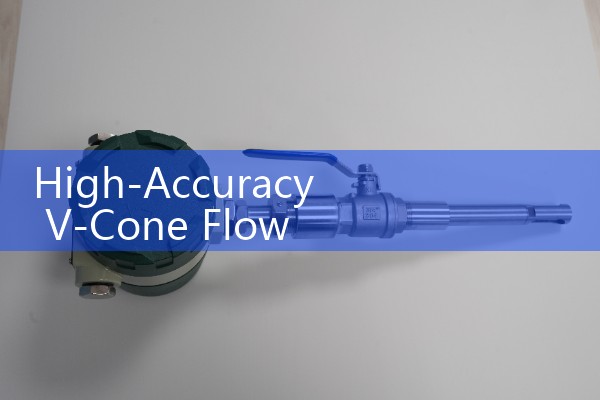
You can install a V-Cone horizontally, vertically, or on an inclined pipe. The meter needs no upstream tube bundle or flow conditioner plate. Align the arrow on the body with the flow direction, bolt the flanges, and connect impulse lines to a standard DP transmitter via a 3-valve manifold. For gas or steam, slope impulse lines downward to stop condensate. For liquid, slope upward and add a gas seal. A geothermal operator in Chile swapped a target meter for a V-Cone on a wet steam line with only 1.8 meters of straight pipe before the turbine. The meter body was 316L stainless with PTFE seals rated for 180°C steam. They finished the whole change in one shift and got stable 4-20 mA output, which tightened turbine control and reduced trip events.
How to Get a Quote for Your Tight Pipe Layout
To receive a proper proposal from Silver Automation Instruments, send us your process data. We need fluid type, flow range (minimum, normal, maximum), operating pressure in bar, temperature in °C, pipe internal diameter in mm, and the exact straight run lengths available upstream and downstream. Also let us know if you need ATEX Zone 1 or Zone 2 certification, material grade like 316L or duplex, and your flange standard such as ASME B16.5 or EN 1092. Our engineers will pick a beta ratio, DP range, and transmitter configuration. We can supply the complete meter run with a compact DP transmitter mounted directly, or with remote diaphragm seals for high-viscosity liquids. A factory calibration certificate traceable to national standards comes with every meter. Send your process data to [email protected]. For a fast response, you can reach us on WhatsApp at 86-135-12131526 or call our team at +86-135-1213-1526. To discuss a sketch on WeChat, add +86 13512131526.
Frequently Asked Questions
What accuracy can I get with only 1D of straight pipe upstream?
With a beta ratio around 0.6 and a single elbow upstream, field results and wet calibrations show ±0.5% of reading is achievable. With a gate valve disturbance, we have seen ±0.3% on a DN100 line. Always share your isometric drawing for a more specific assessment.
Can a V-Cone handle a small amount of gas in a liquid line?
A V-Cone tolerates minor entrained gas or liquid droplets better than an orifice plate because the cone shape prevents pooling and erosion. For persistent two-phase slug flow, no DP meter is reliable. In those cases we recommend a Coriolis mass flow meter instead.
What materials do you offer for corrosive fluids?
Our standard materials are 316L stainless, carbon steel, and duplex stainless. For hydrochloric acid, hot sulfuric acid, or similar media, we supply Hastelloy C276 cones and bodies, or PTFE-lined construction. The cone itself can be a different alloy if you need extra erosion resistance.
Do I need special electronics or software for a V-Cone meter?
No. The V-Cone is a mechanical differential pressure device. It works with any standard DP transmitter from your existing stock. You keep your current transmitter, wiring, and DCS configuration. We deliver the meter body, impulse piping if needed, and a calibration sheet.
How do we verify the V-Cone reading during commissioning?
Common checks include comparing the DP output with a clamp-on ultrasonic meter or doing a timed fill test into a calibrated tank. The meter comes with a meter factor report. Since there are no moving parts, drift is minimal. We recommend an annual impulse line inspection and a zero check of the transmitter.
For a V-Cone flow meter quote with your restrictive piping layout, email [email protected] or call +86-135-1213-1526 today.
 Hot Blog
 Related AD
