


『Advantages of Thermal Mass Flow Meter: Unobstructed Gas Velocity Tracking Benefits』Related information(clamp on meter|electromagnetic meter|venturi meterrotameter|orifice meter|ultrasonic flow meter|mass flow meter|coriolis mass flow meter|coriolis flow meter|magnetic flow meter|magmeter flow meter|magflow flow meter|mag meter flow meter|electromagnetic flow meter|vortex flow meter|turbine flow meter|thermal mass flow meter|thermal flow meter|rotameter flow meter)

Advantages of Thermal Mass Flow Meter: Unobstructed Gas Velocity Tracking Benefits
Quick Answer: A thermal mass flow meter measures gas mass flow directly with no moving parts. The gas path stays unobstructed, so pressure drop stays low and low velocity measurement stays stable. This meter fits compressed air, natural gas, biogas, and nitrogen lines from DN15 to DN2000.
What Does Unobstructed Gas Velocity Tracking Mean
Two PT100 sensors sit in the gas stream. One sensor is heated. The other reads gas temperature. Gas molecules carry heat away from the heated sensor. The cooling effect tracks mass velocity. No orifice plate and no turbine rotor restrict the flow. That is the core benefit of unobstructed gas velocity tracking.
Because the flow path stays open, the meter adds very little back pressure. This matters on low pressure gas lines. A digester gas line may run at 80 mbar. A differential pressure meter would consume too much of that pressure. A thermal meter does not.
Direct Mass Flow Without Temperature and Pressure Compensation
Most gas flow devices measure volume. Engineers then convert volume to mass using pressure and temperature. That step adds sensors and error. A thermal mass flow meter reads mass velocity directly and reports kg/h or Nm3/h from the start.
Here is the thing. A compressed air audit in a Thai packaging plant ran at 7 bar. The line pressure moved between 6.2 and 7.4 bar during the day. The thermal meter did not care. It still reported mass flow within 1 percent of reading plus 0.5 percent full scale. No external pressure transmitter was needed.
Wide Turndown Ratio and Low Flow Sensitivity
The turndown ratio on a Silver Instruments thermal mass flow meter reaches 100:1. This matters when gas demand swings from a few standard cubic meters per hour to a much larger flow. An insertion probe can read from 0.1 Nm/s up to 100 Nm/s.
In practice, most engineers skip low flow checks on mechanical meters. But low flow often indicates leaks. A thermal meter catches small night shift leaks in compressed air headers because it does not have a stall point like a vortex meter.
Low Pressure Drop That Reduces Operating Cost
Pressure drop is not a line item on a utility bill. The cost shows up in compressor run time and blower power. On a DN80 compressed air line at 7 bar, the permanent pressure loss from a thermal mass flow meter can stay below 10 mbar.
So what does that save? For a plant running a 75 kW compressor, a small reduction in system pressure can cut energy use by 1 to 2 percent. In Southeast Asia, where electricity costs range from 0.08 to 0.14 USD per kWh, that adds up over 8,000 hours per year.
No Moving Parts and Minimal Maintenance
Thermal mass flow meters have no bearings and no rotating parts. The wetted parts are normally 316L stainless steel. A customer in Peru measured biogas from dairy farm digesters. The gas had hydrogen sulfide and moisture. We supplied a meter with a coated PT100 sensor. The site cleaned the sensor once every six months.
In a natural gas boiler room in Saudi Arabia, the meter has run for three years without recalibration. The gas is dry and clean. A local technician checks the 4-20 mA HART signal once a month. That is the entire maintenance plan.
Typical Installation and Outputs
Silver Automation Instruments offers inline and insertion thermal mass flow meters. Inline sizes cover DN15 to DN100.
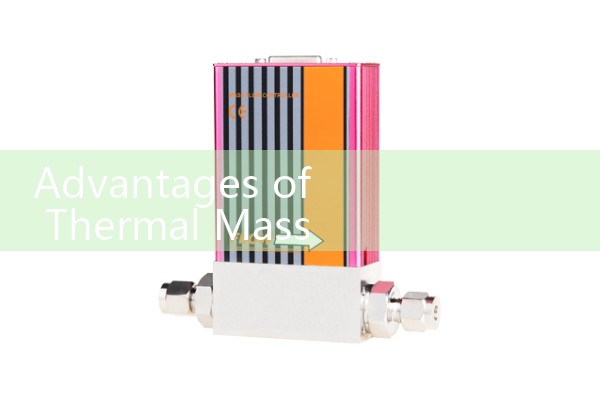
Power options include 24 V DC and 220 V AC. Process temperature can go up to 200 degrees Celsius. Pressure rating depends on the probe and connection, with common versions up to 40 bar. You can set the gas type, pipe size, and flow unit from the keypad or HART communicator.
Real Customer Scenarios
A plastic packaging plant in Ho Chi Minh City installed a Silver Instruments thermal mass flow meter on a DN80 compressed air header. The meter showed a 15 percent leak rate when compared to nameplate compressor capacity. The customer tightened fittings and saved about 4,200 USD per year in electricity.
Another customer in Argentina runs a wastewater treatment plant. They use a thermal mass flow meter on aeration air lines. The blower output varies from 500 to 5,000 Nm3/h. The meter tracks the low end without the noise problems they had with an old differential pressure setup.
When Not to Choose a Thermal Mass Flow Meter
Thermal mass flow meters are not for liquid. They need a known gas composition. If the gas mixture changes often, the heat transfer property changes and the reading drifts. Thermal meters also do not like heavy condensation. Wet gas can affect the heated sensor. In those cases, a vortex meter with temperature and pressure compensation may be a better fit.
Also, the meter works best in a developed flow profile. You need a straight run of 15 pipe diameters upstream and 10 downstream for insertion probes. In crowded pipe racks, the installation may need a flow conditioner. But most engineers skip that until the first calibration check shows a shift.
Frequently Asked Questions
1. Can a thermal mass flow meter measure liquid flow?
No. It is designed for gas only. For liquid, Silver Automation Instruments offers electromagnetic, vortex, or Coriolis mass flow meters.
2. What gas types can a thermal mass flow meter handle?
Compressed air, nitrogen, oxygen, natural gas, biogas, digester gas, carbon dioxide, argon, and flue gas. The gas composition must be known before calibration. Our factory can set a correction factor for mixed gas.
3. What pipe sizes does Silver Instruments cover?
Inline meters cover DN15 to DN100. Insertion thermal mass flow meters cover DN50 to DN2000. For larger ducts, we quote a custom probe length.
4. What output signals are available?
Standard output is 4-20 mA HART. Modbus RS485 is optional. We can also add two pulse outputs or a relay for totalizer alarms. Most customers ask for 4-20 mA HART because it connects directly to their DCS or PLC.
5. How do I get a price and delivery time?
Send us the gas type, pressure in bar, temperature in degrees Celsius, pipe size DN, and flow range in kg/h or Nm3/h. We will reply with a model, size, and price within one business day.
Contact Silver Automation Instruments
Call us at +86-135-1213-1526. WhatsApp is 86-135-12131526. WeChat ID is +86 13512131526. You can also visit our site flow-meter.com.au for the full thermal mass flow meter range.
Send us your pressure (bar), temperature (°C), pipe size (DN), and flow range. We will recommend a meter that keeps your gas path unobstructed.
 Hot Blog
 Related AD
